
Selected local businessRestaurant
Casablanca
Rick's Café
Casablanca · Restaurant
A tribute to the film Casablanca inside a restored townhouse.
City guide
Economic and coastal metropolis, natural gateway to Morocco.
Casablanca is Morocco's largest city and main economic hub. For many international travellers it is also the country's first stop: Mohammed V Airport handles most long-haul flights, and Casa-Voyageurs station connects the city to Rabat, Tangier and Marrakech.
Often seen as less postcard-perfect than Marrakech or Fès, Casablanca nevertheless has a strong character: Art Deco architecture, Atlantic seafront, nightlife, an evolving food scene, and the spectacular Hassan II Mosque rising over the ocean.
Casablanca combines several useful assets for travellers: an international airport, hotels in every category, varied dining and direct access to the rest of the country. It's an ideal city to land in, recover from jet lag and start a Moroccan itinerary.
For travellers planning to visit Morocco around 2030, Casablanca is also a practical base: rail links allow quick round trips to Rabat (40 min) or Tangier (just over 2 h with Al Boraq).
Maârif & Gauthier: modern heart of the city, shops, cafés, restaurants, good mid-range and premium hotel offer.
Aïn Diab Corniche: seafront, resort hotels, beach atmosphere, ideal for relaxation.
Historic centre: Art Deco buildings, central market, close to the medina.
Business districts (Sidi Maârouf, Casa-Anfa): international hotels for business travellers.
Mohammed V Airport (CMN) is about 30 km from the centre. The ONCF train links the airport to Casa-Voyageurs in 35-40 min — the simplest, cheapest option. Official taxis and ride-hailing are also available 24/7.
From Europe, Casablanca is well served: direct flights from Paris, Brussels, Madrid, London, Frankfurt and many other capitals.
The tram efficiently covers several major axes (two main lines). Red 'petits taxis' are handy for short trips — always insist on the meter. Count 15-25 min from the centre to the Corniche by taxi.
Ride-hailing apps work in Casablanca and add extra comfort, especially at night.
Hassan II Mosque: city emblem, partly built over the ocean, guided tours available for non-Muslims.
Aïn Diab Corniche: seaside promenade, cafés, restaurants, beaches.
Art Deco district: unique architectural heritage, best explored on foot.
Central Market and old medina: authentic atmosphere, fishmongers, spices, small addresses.
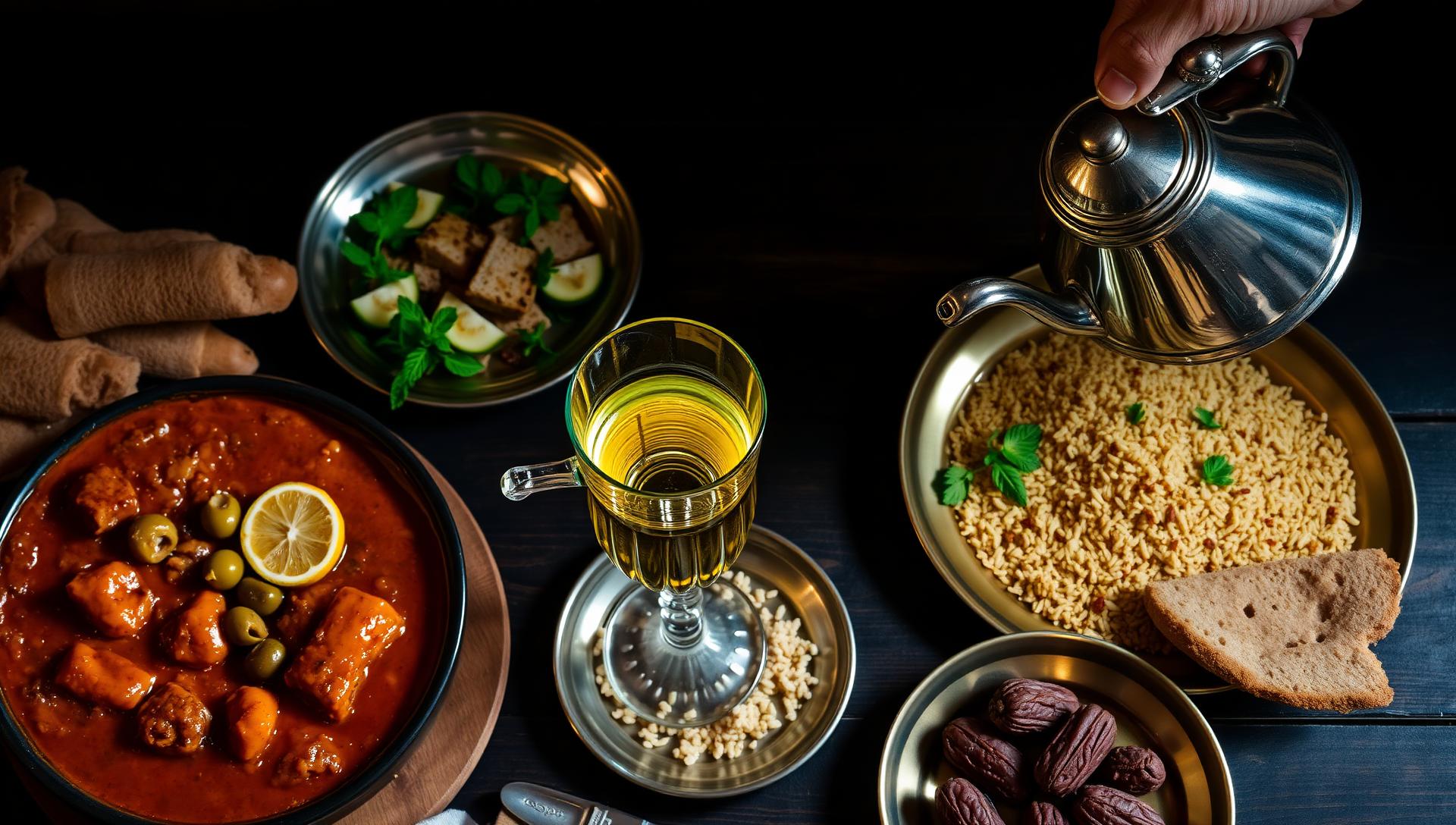
Casablanca offers a booming culinary scene: contemporary Moroccan tables, Mediterranean cuisine, fresh fish, trendy brunches in Gauthier and Maârif. For a local, affordable experience, try small neighbourhood restaurants (tajine, kefta sandwich, evening harira).
Dress relatively modestly, especially for cultural visits. Prefer official taxis at night. Cards are accepted in most hotels and restaurants; keep dirhams for small shops. The guide will be updated with 2030 logistics — always check official information before departure.
Morocco 2030 Local Directory
Add your business to the Morocco 2030 local guide. Start free or choose Starter / Partner for more visibility, direct contact and 0% commission.
Independent Morocco 2030 travel guide
8 selected addresses
Casablanca
Casablanca · Restaurant
A tribute to the film Casablanca inside a restored townhouse.

Casablanca
Casablanca · Shop
A Casablanca institution for Moroccan pastries in the Habous quarter since 1930.
Casablanca
Casablanca · Restaurant
Former Portuguese bastion turned Moroccan restaurant, under bougainvillea.
Yes. With its international airport and rail connections (notably Al Boraq to Tangier and Rabat), Casablanca is an excellent gateway.
Two to three days are enough to see the main sights: Hassan II Mosque, Aïn Diab Corniche, the Art Deco centre and a few notable restaurants.
The centre (Maârif, Gauthier), the Corniche for the sea, or the business districts for professional travellers.
Casablanca is generally safe. As in any big city, watch your belongings in crowds and prefer official taxis at night.
Any specific question? Email us at legal@lytheron.com.
◆Editorial note
This independent guide is updated progressively as public travel information becomes available. Always check official sources for match schedules, tickets and event-specific rules.
Local Businesses
Free listing or Starter / Partner visibility. 0% commission, direct contact.
legal@lytheron.com