
Food guide
What to Eat in Morocco
Tajine, couscous, pastilla, street food and etiquette: everything to eat well during your stay.
Moroccan cuisine is one of the richest in the Mediterranean: spices, long-simmered dishes, pastries, Berber, Andalusian, Arab and Jewish influences. Here are the must-try dishes and good practices for travellers.
Tagine (tajine)
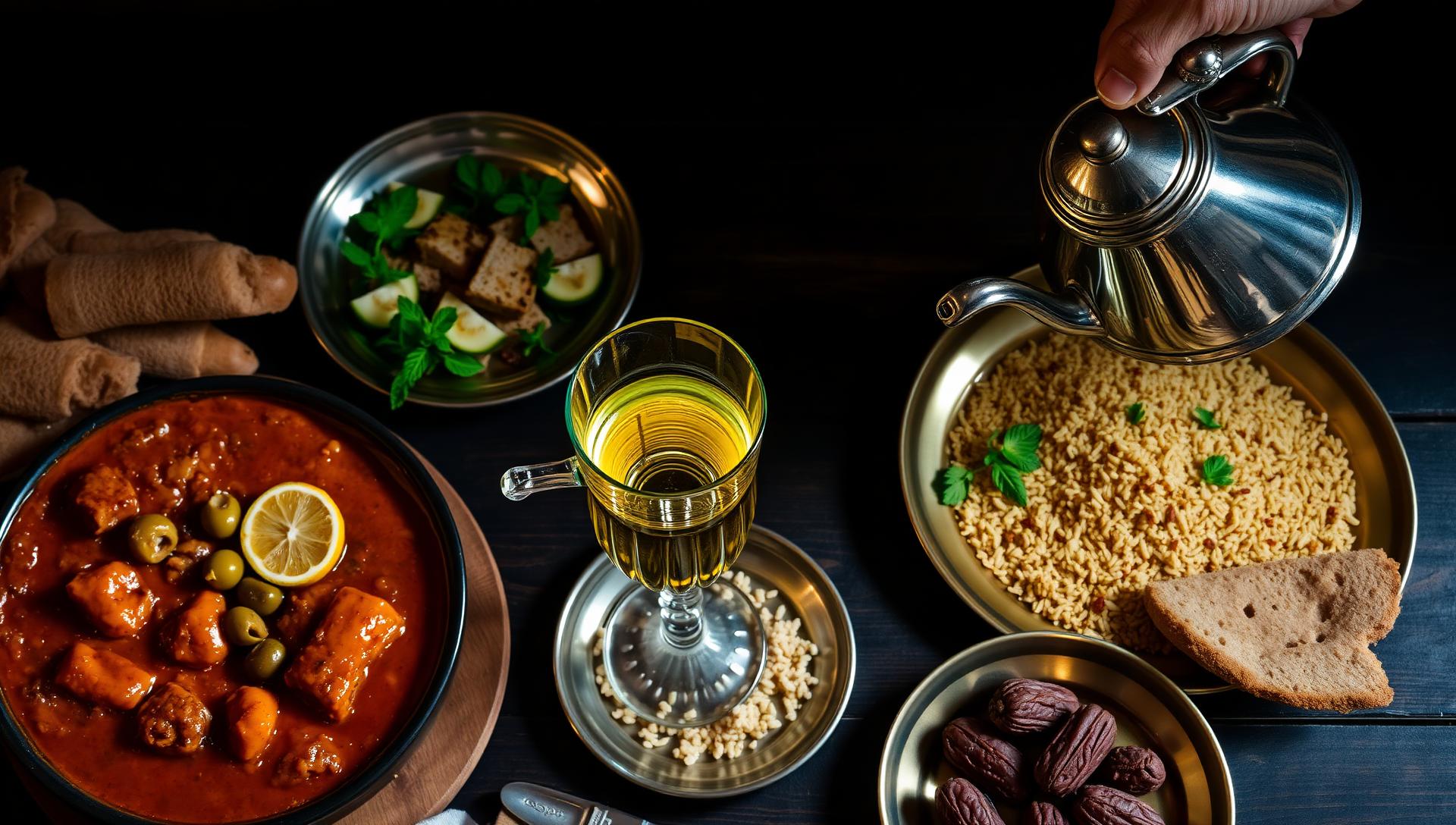
Dish simmered in a conical clay vessel. Endless variations: chicken with preserved lemon/olives, lamb with prunes, kefta with egg, fish chermoula. Served with bread (khobz) for soaking up sauce.
Couscous
Traditionally served on Friday at lunch. Fine steamed semolina, vegetables, meat (lamb or chicken). Sweet-savoury versions (tfaya) are delicious. A must-try in a family setting or quality restaurant.
Pastilla
Thin pie with pigeon or chicken, almonds, cinnamon, icing sugar. Surprising and refined sweet-savoury mix. Also exists in fish/seafood version.
Harira
Nourishing soup with tomatoes, lentils, chickpeas, meat and herbs. Iconic Ramadan dish, served with dates and chebakia. Excellent in the evening.
Msemen, baghrir, harcha
Breakfast breads and pancakes. Layered msemen, 1000-hole baghrir, semolina harcha. Served with honey, melted butter, fresh cheese and mint tea.
Mint tea
The national drink. Gunpowder green tea, fresh nanah mint, sugar. Served at all hours, gesture of hospitality. Pouring from height creates a nice foam.
Restaurants vs street food
Restaurants: from simple neighbourhood tables (€10-20/person) to gastronomic ones (€60+).
Street food: skewers, kefta sandwich, snails (Marrakech), grilled fish (Essaouira, Tangier). Choose busy stalls where cooking is visible.
Café culture
Cafés are central social spaces. Black coffee (kahwa kahla), coffee with milk (nous-nous). Legendary cafés in Tangier (Hafa, Gran Café de Paris), Casablanca, Marrakech.
Table etiquette
Eat with the right hand if the dish is shared. Refusing tea can be seen as impolite — accept at least symbolically. Dress correctly in traditional restaurants.
Vegetarian and halal
Many vegetarian dishes (zaalouk, taktouka, salads, meat-free harira, msemen). All meat served is halal.
Food safety tips
Prefer bottled water. Avoid juices with doubtful ice. Choose busy establishments. Wash or peel fruit.
Practical checklist
- ◆Try a traditional tajine
- ◆Have couscous on Friday
- ◆Drink mint tea on a terrace
- ◆Breakfast on msemen + honey
- ◆Bottled water only
- ◆Tip 5-10% in restaurants
Morocco 2030 Local Directory
Own a local business in Morocco?
Add your business to the Morocco 2030 local guide. Start free or choose Starter / Partner for more visibility, direct contact and 0% commission.
Read also
Frequently asked questions
Can you eat vegetarian in Morocco?+
Yes. Many naturally vegetarian dishes (simmered vegetables, meat-free harira, salads, msemen). Say 'bla lham' (no meat).
Is the meat halal?+
Yes, meat served in Morocco is halal by default.
Can you drink tap water?+
Better to stick to bottled water, especially for visitors not used to it.
Should I tip?+
Yes, it's appreciated: 5-10% in restaurants, a few dirhams at cafés.
Any specific question? Email us at legal@lytheron.com.
◆Editorial note
This independent guide is updated progressively as public travel information becomes available. Always check official sources for match schedules, tickets and event-specific rules.