
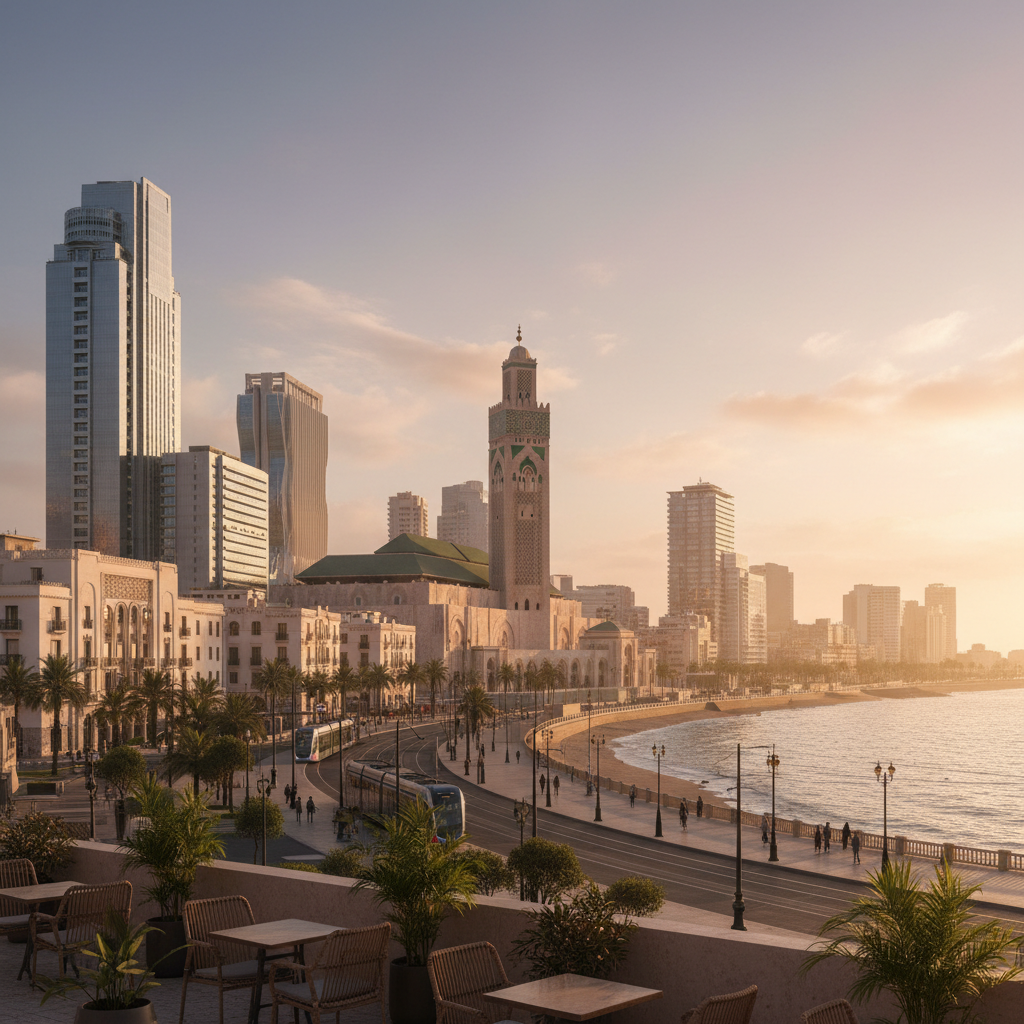
Introduction to Casablanca and the 2030 Vision
As Morocco prepares to co-host the 2030 FIFA World Cup, Casablanca stands at the forefront of this historic transformation. Known as the economic powerhouse of the Kingdom, the city is blending its rich Art Deco heritage with futuristic infrastructure. This Casablanca Morocco 2030 travel guide is designed to help international football fans and tourists navigate a metropolis that is rapidly evolving. Whether you are visiting for the world-class matches or the cultural landmarks, understanding the layout and logistics of this coastal giant is essential for a seamless experience.
Casablanca is not just a transit point; it is a destination of contrasts. While many travelers arrive via Mohammed V International Airport and head straight to other cities, the 2030 event will place the city center stage. The local government is investing heavily in urban renewal, expanding green spaces, and upgrading the public transport network to accommodate millions of visitors. For those planning their journey, checking our projects page will provide insights into the ongoing developments across the city.
The Grand Stade de Casablanca: A New Football Cathedral
The centerpiece of the 2030 tournament in the region is the Grand Stade de Casablanca. Located in Mansouria, near Benslimane, just outside the main urban sprawl, this stadium is set to be one of the largest and most technologically advanced sporting venues in the world. Its design, inspired by a traditional Moroccan tent known as a 'Moussem,' reflects the nation's cultural identity while meeting the highest FIFA standards.
Getting to the stadium will be a priority for fans. The Moroccan government is extending rail links and highway networks to ensure that the venue is easily accessible from the city center and other major hubs like Rabat. Visitors should consult our guide on stadiums for specific details on seating, facilities, and match-day logistics. The stadium is expected to host high-profile matches, potentially including the final, making it the focal point of global football in 2030. Surrounding the stadium, a new sports city is being developed, featuring training grounds, hotels, and retail spaces to serve the influx of international supporters.
Iconic Landmarks: Hassan II Mosque and Beyond
No visit to Casablanca is complete without witnessing the Hassan II Mosque. As one of the largest mosques in the world, its minaret towers over the Atlantic Ocean, serving as a beacon of Moroccan craftsmanship. The mosque is unique because it is one of the few religious sites in the country open to non-Muslim visitors through guided tours. The intricate zellij tilework, carved cedar wood, and the retractable roof are marvels of modern engineering and traditional art.
Beyond the mosque, the city offers a wealth of architectural interest. The Habous Quarter, also known as the New Medina, provides a more relaxed shopping experience compared to the bustling souks of other cities. Here, you can find high-quality leather goods, spices, and traditional Moroccan pastries. For those interested in the city's colonial history, the administrative center around Place Mohammed V showcases stunning Mauresque architecture, a blend of French colonial and traditional Moroccan styles. To better understand where to base yourself during the tournament, visit our section on where to stay for neighborhood recommendations.
Transportation and Connectivity in Casablanca
Navigating a city of over four million people requires a solid plan. Casablanca is the primary hub for morocco-transport, boasting an extensive tramway network that connects major residential districts with the business center and the coast. For 2030, the tram system is being further expanded to ensure fans can move between fan zones and their accommodation with ease.
For intercity travel, Casa Voyageurs is the main railway station. It serves as a critical stop for the Al Boraq high-speed train, which connects Casablanca to Tangier in just over two hours, with stops in Rabat and Kenitra. This makes it possible to stay in Casablanca while attending matches in other host cities. Additionally, the city's 'Petit Taxis' (red cars) are a convenient way to move short distances, though it is important to ensure the meter is running. For larger groups, 'Grand Taxis' operate on fixed routes or can be hired for private trips. Mohammed V International Airport remains the primary gateway for international arrivals, with upgraded rail links directly to the city center.
Dining and Lifestyle: Food in Morocco
Casablanca is a culinary melting pot. From high-end French bistros to traditional Moroccan eateries, the food scene is vibrant and diverse. Visitors must try the local seafood, which is caught fresh daily from the Atlantic. The Corniche area in Ain Diab is famous for its beachfront restaurants and nightlife, offering everything from traditional tagines to international fusion cuisine.
For a truly authentic experience, head to the central market (Marché Central) for a lunch of grilled fish or a hearty bowl of Harira soup. If you are looking for more detailed culinary advice, our guide on food-in-morocco covers the must-try dishes and etiquette. During the 2030 World Cup, expect numerous fan zones to offer a variety of street food options, allowing fans to sample Moroccan flavors while watching the games on big screens. The city's cafe culture is also a vital part of daily life; spending an afternoon sipping mint tea at a sidewalk cafe is the best way to soak in the local atmosphere.
Preparing for Your 2030 Visit
Planning ahead is crucial for a successful trip to Casablanca during the World Cup. Accommodation will be in high demand, so booking well in advance is recommended. The city offers a range of options, from luxury hotels along the waterfront to boutique riads in the heart of the city. It is also worth noting that Casablanca's weather in the summer can be humid, though the ocean breeze provides some relief.
Safety and hospitality are hallmarks of Moroccan culture. While the city is generally safe for tourists, standard urban precautions apply. Learning a few basic phrases in Moroccan Arabic (Darija) or French can go a long way in enhancing your interactions with locals. As the city gears up for 2030, the spirit of welcome is stronger than ever, with residents eager to share their city with the world. Keep an eye on our en/blog for the latest updates on fan zones, ticketing, and local events as the tournament approaches. Casablanca is ready to prove itself as a world-class host, combining its industrial grit with a warm, cosmopolitan soul.